Commuting Roads Transit: HOV lanes I-10 Texas Department of Transportation US 281 widening
by Brian
Comments Off on Not gonna use the HOV lane? It still benefits you!
Not gonna use the HOV lane? It still benefits you!
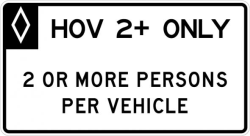
TxDOT is preparing to build San Antonio’s first two high-occupancy vehicle (HOV) lanes on I-10 West and US 281 North. Construction of both is scheduled to start this year.
One comment I frequently hear about HOV lanes is from people saying they won’t use them, so they won’t benefit from them. A corollary of that is that people who won’t use them don’t think their tax money should be spent on them. As is often the case, both of these viewpoints fail to see the bigger picture.
Automobiles Commuting Data visualizations Travel
by Patrick
Comments Off on Where to find alternative fuel stations in Texas
Where to find alternative fuel stations in Texas
If you’re going to invest in an alternative-fuel vehicle, you might want to check where you can fill up. The city you’re in makes a difference.
For those relying on biodiesel, you’re good to go in Austin and not so bad in San Antonio, recent data from DriveBiodiesel.net shows.
Dallas has a broad mix of E85 and natural gas pumps, according to E85Locator.net and CNGLocator.net. Houston has a decent spread of E85 stations.
West Texas? One station, in Midland. Natural gas.
One thing’s for sure, if you want to take a road trip in an alternative-fuel vehicle, plan well. Some places will leave you with fumes.
Texas road-rage accidents dashboard
When are drivers likely to lose their cool, to the point of rage?
I figured the hours after bars closed on weekends were the hot times. But that’s not true, according to a state road-rage database obtained by the Express-News.
I put together an online dashboard to query the database, which is hosted as a Google Fusion Table. It’s a great way to get a quick snapshot of layered filters, such as age, gender, ethnicity, days, times, etc.
Try it out below. For convenient side-by-side comparisons, click the “Compare Two Views” button under the dashboard.
I gleaned a few interesting insights myself.
Automobiles Commuting Data visualizations Oil and gas prices Travel
by Patrick
Comments Off on Record high gas prices changing how Americans drive
Record high gas prices changing how Americans drive
With wild swings in gas prices pushing ever higher, U.S. drivers are slowly curbing their habits.
Regular-grade gas averaged more than $3.60 a gallon nationwide in 2011 and 2012. It’s never been so high, even when adjusted for inflation. The last records were set during the Iran hostage crisis three decades ago.
High prices, along with recessions, have tugged at America’s driving addiction, bringing down mileage in 1979 and again in recent years. But unlike gas prices, which can arc 40 percent in a year, driving habits die hard.
The difference jumps out when you juxtapose the data in a graphic. Mashing data like this can sometimes be confusing when you have two separate axes, but I think there’s an interesting pattern here.
Automobiles Commuting Data visualizations
by Patrick
Comments Off on Worst commutes in San Antonio
Worst commutes in San Antonio
San Antonio commuters spend an average of 23 and a half minutes getting to work, the latest federal data show.
Nothing shattering. In fact, it’s about two minutes less than the national average.
But what surprises me are some of the zip codes with the longest commutes.
Before seeing the U.S. Census data mapped out recently by a team at WNYC in New York, I figured commuters with the longest slogs tended to live in areas swaddling Loop 1604 on the North Side and exurbs like Boerne and New Braunfels.
In the map above, the beleaguered U.S. 281 corridor shows up as expected. But South Loop 1604 looks worse than its northern leg. And look at the bruised ring of satellites to the west and south.
A concentration of jobs on the North Side, along Loop 1604 and interstates 35 and 10, is likely sucking in many of these commuters from counties on all sides. The pull is stronger and wider than than I had realized.
You can hover over zip codes to see average commute times. You can also slide the map to see other cities, and zoom out to see other states. Here’s a full-page version.
Note that these stats include transit, walking and bicycling. But in a car town like San Antonio, despite volatile gas prices the past five years, nine out of 10 people still drive or carpool to work. Here’s a breakdown.
Commuting Construction and closures Roads: Texas Department of Transportation Texas Transportation Institute
by Patrick
Comments Off on Worst traffic road conditions in Texas
Worst traffic road conditions in Texas
Officials have released a list of the 100 worst traffic conditions in Texas.
Dallas motorists suffer the most highly congested road conditions in Texas, says a recent report from the Texas Department of Transportation.
The state’s top three bottlenecks are all located in Dallas County, according to the 100 Most Congested Roadway Segments in Texas. But while Dallas has the hottest spots, Harris County actually has more of them. The Houston area has 31 on the worst road conditions traffic list while Dallas has 21.
Road conditions for Fort Worth are next in line for headaches, with 15 tight spots, followed by San Antonio with 11 and Austin with 10.
Here are the top 10 most congested roads and their respective counties:
Commuting Gas taxes Oil and gas prices Passenger rail Roads Transit: congress
by Patrick
Comments Off on What’s ahead for gas prices, taxes and roads
What’s ahead for gas prices, taxes and roads
You’ll likely pay more than $3 a gallon for gas next spring.
But you’ll probably keep paying the same 18 cents per gallon federal gas tax — which has lost more than a third of its purchasing power since it was last raised in 1993.
The roads you drive on will get worse. Transit will face ongoing challenges.
That’s what appears in the fog ahead as Republicans take back the U.S. House amid the worst financial crisis since the Great Depression. Feeding voter sentiments are widespread fears about rampant spending and taxing.
Incoming Transportation Committee Chairman John Mica of Florida told reporters last week that the gas tax will go nowhere — which mirror’s President Obama’s position — and that he wants to reconsider recent high-speed rail grants.
But Mica also said he’ll grab hold of a stalled $500 billion six-year transportation reauthorization bill, now a year overdue, and work to push it through. The bill is twice as much as the 2005 law and twice as much as what the gas tax will bring in.
Even so, the massive bill still falls some $150 billion short of just being able to maintain what we have, indicates a report headed by two former U.S. transportation secretaries. And that’s just the federal gap — states and local entities have holes too.
We are facing an “elegant degradation” of our transportation system, the report warns. It will be slow, sure and very costly.
SOURCES:
- Federal gas-price predictions
- St. Augustine Record report
- Reuters report
- New York Times report
- Well Within Reach report
OTHER STUDIES:
Commuting Passenger rail Roads Safety Toll roads Travel: Interstate 35
by Patrick
Comments Off on Big plans for Texas’ worst highway (including tolls and rail)
Big plans for Texas’ worst highway (including tolls and rail)
Planners and pundits have long decried Interstate 35 as Texas’ worst highway.
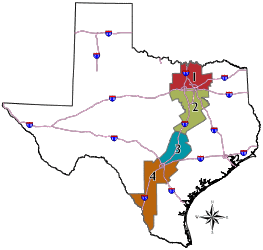
Notorious traffic backups and numerous crashes on I-35, especially on the stretch from San Antonio to Austin, have spawned big-ticket projects such as the SH 130 tollway and Lone Star commuter rail. Putting two and two together from such thinking eventually led to the now supposedly defunct Trans Texas Corridor.
But more big plans are in the making.
Four committees, each looking at a segment of I-35, are holding public meetings this month to wrap up draft plans on what to do with the highway, its feeders and parallel roads. Billions of dollars worth of projects are eyed, including this for South and Central Texas:
- Convert one I-35 lane each way into toll/carpool lanes from Buda to Georgetown
- Remove tolls and widen SH 130 to six lanes from Seguin to Georgetown
- Build high-speed passenger rail from San Antonio to Dallas
- Build passenger rail from San Antonio to Laredo
- Widen I-35 from San Antonio to Laredo
Automobiles Commuting Safety
by Patrick
Comments Off on Live longer by driving less (or at least slower)
Live longer by driving less (or at least slower)
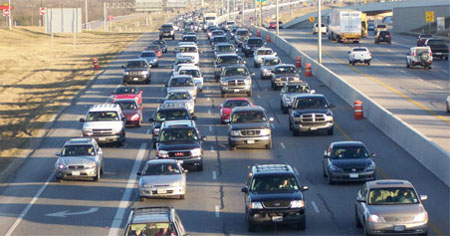
San Antonio traffic jam photo from viainfo.net.
A recent study laid out what I found to be an amazing stat.
For every hour driving, U.S. life expectancy decreases by 20 minutes, suggests analysis in a University of Toronto study. The shorter life spans are due to crashes.
An hour a day is about the average two-way San Antonio commute. So the typical driver here loses four days a year, about half a year over a 40-year career. The payoff is a year and a half slogging through traffic to make the bucks.
The finding that drivers lose a minute of life for every three minutes on the road wasn’t even the main point of the study. Authors wanted to consider the risks of driving faster to reduce travel times. They determined that time saved by speeding is far outweighed by shortened lives due to higher chances of crashing.
The conclusion: Americans drive a little too fast and can live longer by driving slower.
Commuting Parking Passenger rail Railroads Transit Travel
by Hugh
Comments Off on Passenger rail in Asutin and San Antonio
Passenger rail in Asutin and San Antonio
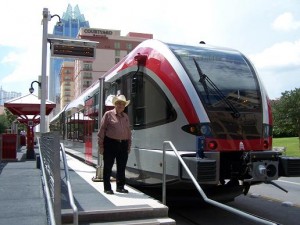
Larry Walsh and the Austin MetroRail
My friend, Larry Walsh, and I finally found the time last Tuesday, July 27, to make a visit to Austin’s new commuter rail line, Capital MetroRail. This is what is hoped to be the first thirty miles of a city wide system. This first section runs from the city center at 4th and Trinity to Leander, a commuter colony way to the north of Austin itself. more »